
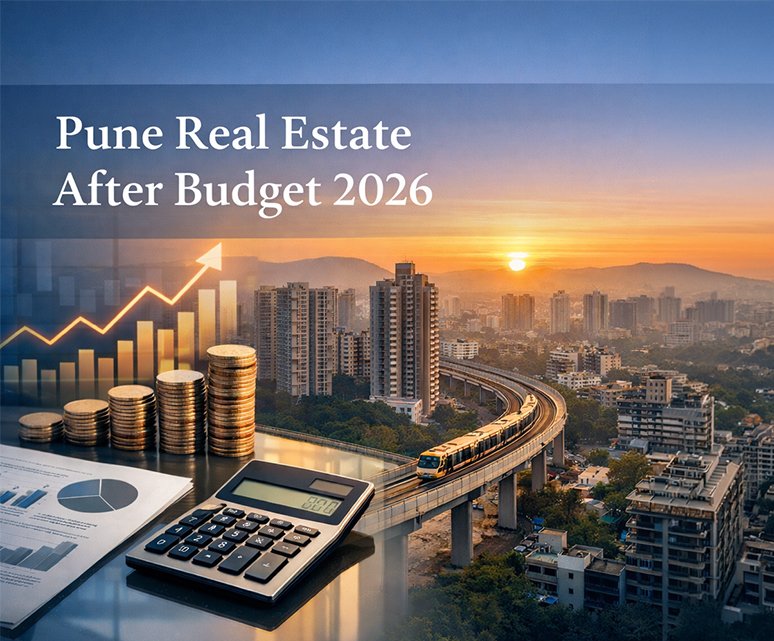
Every year, the Union Budget influences buyer sentiment across sectors, and housing is no exception. However, beyond headlines and quick reactions, smart buyers focus on practical implications. Understanding Pune real estate after Budget 2026 requires looking at long-term fundamentals rather than short-term excitement.
For families and professionals planning property decisions this year, the right approach is clarity, not speculation. The Budget can shape confidence, liquidity, and infrastructure allocation, but real estate value ultimately depends on demand, location, and livability.
Why the Budget Matters to Homebuyers
The Budget 2026 real estate impact may not always be dramatic, but it often influences buying sentiment through policy signals. Areas buyers typically monitor include:
- Home loan interest provisions
- Tax benefits on housing loans
- Infrastructure spending allocations
- Support for affordable and mid-segment housing
- Urban development incentives
While these measures can improve affordability or confidence, they do not replace core fundamentals such as location strength and employment demand.
When analyzing Pune real estate after Budget 2026, buyers should ask one simple question: does this change the long-term growth potential of the city?
Infrastructure Spending and Its Influence on Pune
One of the most important aspects of any Budget is infrastructure allocation. Pune continues to benefit from long-term infrastructure expansion, particularly in western corridors.
Key developments influencing real estate investment 2026 include:
- Metro expansion across Pune
- Ring Road connectivity improvements
- Strengthening of the Hinjawadi IT corridor
- Road upgrades linking New Hinjawadi and surrounding areas
Infrastructure shapes access. Access shapes demand. Demand shapes property stability.
For buyers studying Pune real estate after Budget 2026, areas aligned with these infrastructure upgrades are likely to remain relevant over time.
What Smart Buyers Should Watch in Pune
Rather than reacting emotionally to Budget announcements, experienced buyers evaluate on-ground realities.
Here are practical factors to monitor:
1. Location Stability
Micro-markets with employment support tend to remain resilient. For example, New Hinjawadi real estate continues to attract attention because of its proximity to the IT Park and improving connectivity.
2. Employment-Driven Demand
Homes near major employment hubs maintain consistent interest. Demand for homes near Hinjawadi IT Park remains strong due to ongoing IT expansion.
3. Livability and Community Planning
Projects that offer open spaces, peaceful surroundings, and thoughtful layouts often sustain buyer interest longer than high-density developments.
4. Configuration Trends
The ongoing discussion around 3 BHK vs 2 BHK demand highlights changing buyer priorities. Larger homes are increasingly preferred by families planning longer stays.
These fundamentals matter far more than temporary market reactions.
Budget Sentiment vs Ground Reality
There is often a difference between Budget sentiment and real market movement. While announcements may temporarily influence booking trends, long-term growth depends on:
- Employment stability
- Infrastructure progress
- Migration patterns
- Usability of the residential environment
When evaluating Pune real estate after Budget 2026, buyers should focus on fundamentals that support long-term property value, not short-term noise.
Real estate remains a patient asset class. Buyers who plan with a 5–10 year horizon typically benefit from steady growth rather than rapid fluctuations.
Why Pune West Deserves Attention in 2026
Among Pune’s residential zones, Pune West continues to attract serious homebuyers. The region balances access to employment hubs with relatively calmer surroundings.
Within this belt, projects such as Pelican Pune 3BHK Flats reflect what today’s buyers are seeking:
- Proximity to the Hinjawadi IT Park
- Access to growing infrastructure
- Nature-oriented planning
- Spacious configurations suitable for families
Located in the evolving New Hinjawadi corridor, Pelican aligns with trends shaping Pune real estate after Budget 2026. Instead of relying on speculative appreciation, it benefits from practical factors such as location strength and livability.
As New Hinjawadi real estate matures, projects positioned early in the development cycle often gain from consistent demand driven by IT professionals and family buyers.
A Balanced View of Pune Real Estate After Budget 2026
The broader takeaway is simple. Pune real estate after Budget 2026 remains driven by long-term fundamentals rather than isolated announcements.
Buyers should prioritize:
- Stable micro-markets
- Infrastructure-aligned locations
- Projects near employment zones
- Community-focused developments
- Configurations suited to long-term living
In corridors like New Hinjawadi, where employment access meets expanding infrastructure, residential demand continues to remain steady. Projects such as Pelican Pune represent how these factors can combine in a balanced way, offering both lifestyle comfort and market relevance.
Conclusion:
When evaluating Pune real estate after Budget 2026, the smartest strategy is calm analysis. Budgets influence sentiment, but real estate value is built on employment, infrastructure, and usability.
For buyers planning long-term ownership, focusing on strong micro-markets such as New Hinjawadi, monitoring infrastructure growth, and selecting thoughtfully designed communities can create stable value over time.
In the end, successful property decisions are not made on announcement days. They are made by aligning location, lifestyle, and financial planning with long-term vision.