
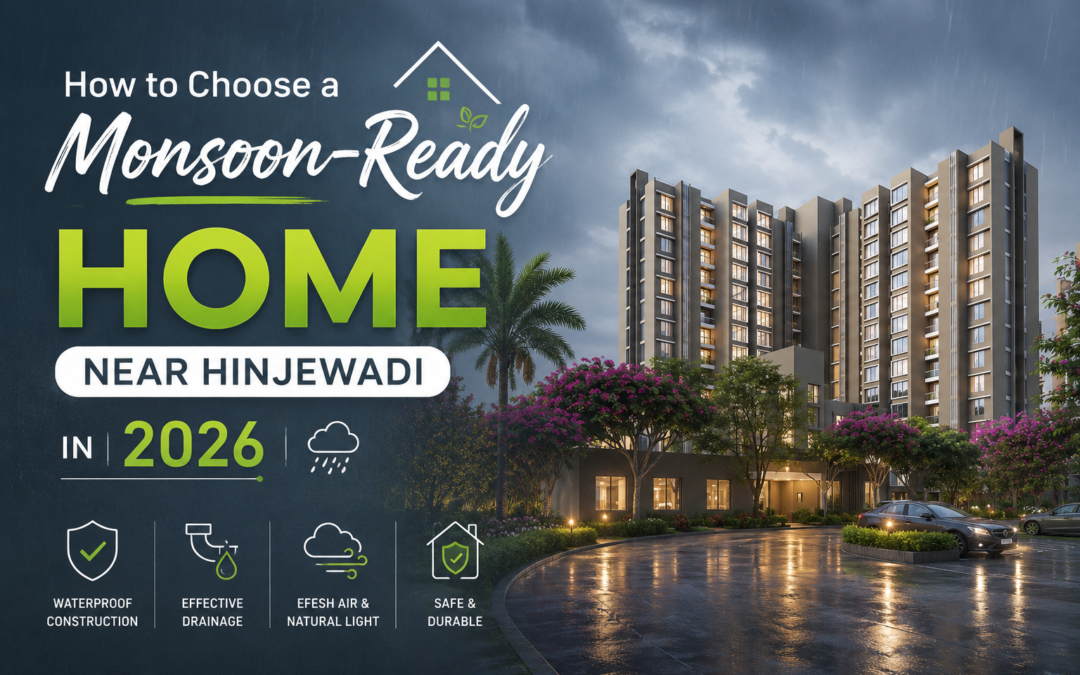
Buying a home during the monsoon can feel inconvenient at first. Site visits may take longer, roads may be wet, and the weather can make travel unpredictable. But for serious homebuyers, monsoon is actually one of the best times to evaluate a property.
A home that looks good in summer may reveal very different realities during heavy rain. Road access, drainage, slope, seepage, parking, ventilation, and common-area maintenance become much easier to judge when the weather puts the location and building to the test.
This is especially important for buyers exploring homes near Hinjewadi, Pirangut, Ambadvet, Marunji, Maan, and the wider Hinjewadi growth corridor. The region has strong residential potential because of IT connectivity, infrastructure progress, and open surroundings. At the same time, monsoon readiness should be evaluated carefully before choosing a home.
If you are planning to buy a 2 BHK or 3 BHK flat near Hinjewadi in 2026, here is what you should check before making a decision.
Why Monsoon Is the Right Time to Evaluate a Home
Most homebuyers prefer site visits on clear days because the project looks cleaner and easier to assess. But a rainy-day visit often gives a more realistic picture of daily living.
During monsoon, you can observe practical details such as:
- Whether water collects near the project entrance?
- How internal roads handle rainfall?
- Whether basement or podium parking remains dry?
- How common areas are maintained?
- Whether lifts and lobbies feel safe?
- How much natural light enters the home on cloudy days?
- Does the home feel humid or well-ventilated?
These details matter because a home is not just about floor plan and amenities. It is also about how comfortably the family can live across all seasons.
Understand the Hinjewadi & Pirangut Location Context
Hinjewadi is best understood as the emerging residential belt around the larger Hinjewadi-Pirangut side of Pune. It includes locations that are connected to the Hinjewadi employment corridor while offering more open surroundings compared to core commercial zones.
For homebuyers, this belt is attractive because it offers a balance of work access, developing infrastructure, greenery, and long-term residential growth. However, because it is still evolving, buyers should check the exact location instead of relying only on broad location branding.
A project may be marketed near Hinjewadi, but the actual experience depends on its approach to roads, surrounding land, water flow, road conditions, and distance from daily essentials.
That is why monsoon site visits are extremely useful in this belt.
Check Road Access During Heavy Rain
The first thing to observe is how easily you can reach the project during rain.
A good location should not only be accessible on paper. It should feel practical during real weather conditions.
During your visit, check:
- Is the approach road wide enough?
- Does water collect on the access road?
- Are there potholes or muddy patches?
- Is the road usable for two-wheelers and cars?
- Are streetlights available on key stretches?
- Does the route feel safe during evening rain?
For families, daily road access is very important. Children may need school transport, working professionals may commute regularly, and senior citizens may require easy movement to clinics or nearby services.
If the road access becomes difficult during the monsoon, it can affect everyday comfort.
Review Drainage and Waterlogging Around the Project
Drainage is one of the most important factors when choosing a monsoon-ready home near Hinjewadi.
Buyers should not only look inside the apartment. They should also inspect the surrounding land and nearby roads.
During the site visit, ask and observe:
- Where does rainwater flow from the project?
- Are stormwater drains visible and maintained?
- Is water collecting near the gate, parking, or internal roads?
- Are nearby nullahs or natural drains blocked?
- Is the project located on lower ground compared to surrounding roads?
- Has the area faced waterlogging in previous monsoons?
This is especially important in the wider Hinjewadi-Maan and nearby growth belts, where drainage and monsoon preparedness have become serious civic discussion points in recent years.
A monsoon-ready home should not depend only on good construction. It should also benefit from proper water flow planning around the project.
Check the Building for Seepage and Waterproofing
A flat may look perfect in dry weather, but monsoon can reveal construction quality.
When visiting a sample flat or ready unit, check carefully for:
- Damp patches on walls
- Water stains near windows
- Peeling paint
- Leakage near balcony doors
- Moisture smell inside rooms
- Cracks around external walls
- Watermarks on ceilings
- Poor sealing around window frames
For top floor flats, terrace waterproofing becomes especially important. For lower-floor units, check whether water collects near the building base or parking level.
A good home should feel dry, fresh, and well-sealed even during continuous rain.
Evaluate Ventilation and Natural Light
Monsoon weather can make homes feel darker and more humid. This is why natural light and ventilation have become important.
When visiting the flat, check how the home feels on a cloudy day.
Ask yourself:
- Does the living room receive enough light?
- Do bedrooms feel airy?
- Is there a cross ventilation?
- Does the kitchen have proper ventilation?
- Does the bathroom have an exhaust or ventilation window?
- Does the balcony help airflow?
Homes with better ventilation feel more comfortable during monsoon because they reduce dampness and improve indoor freshness.
For families considering 2 BHK or 3 BHK flats near Hinjewadi, this can make a big difference in everyday living.
Inspect Parking and Common Areas
Many homebuyers focus only on the apartment and forget to check parking, lobbies, and common movement areas.
During monsoon, these areas reveal how well the project is planned and maintained.
Check:
- Is the parking area dry?
- Is there proper slope for water drainage?
- Are basement entries protected from water flow?
- Are walkways slippery?
- Are common areas well-lit?
- Is there safe access from parking to lift lobby?
- Are emergency exits usable?
A monsoon-ready home should make movement easy for children, elders, and working residents even during heavy rain.
Check Power Backup and Lift Reliability
Power cuts can happen during heavy rain. That is why backup systems are important, especially in multi-storey buildings.
Before booking a flat, ask about:
- Lift backup
- Common area power backup
- Water pump backup
- Security system backup
- Generator capacity
- Maintenance process during outages
For upper-floor homes, lift reliability becomes even more important. A scenic top floor flat may offer excellent views, but daily comfort depends on strong lift and backup systems.
Understand Connectivity and Upcoming Infrastructure Realistically
The wider Hinjewadi corridor is seeing important infrastructure progress in 2026. Pune Metro Line 3 has made substantial progress and is expected to improve connectivity across the larger Hinjewadi-Shivajinagar corridor, but buyers should still evaluate last-mile access from the exact project location.
However, buyers should understand one thing clearly: metro progress improves the region, but every project still depends on last-mile access.
Before choosing a home near Hinjewadi, check:
- Distance from key work locations
- Route to Hinjewadi Phase 1, 2, or 3
- Access toward Wakad, Baner, Bavdhan, and Paud Road
- Availability of daily transport
- Road condition during rain
- Practical commute time during peak hours
A good location is not only about future infrastructure. It should also support your current daily routine.
Ask the Right Questions During a Site Visit
When visiting a project during monsoon, ask direct and practical questions.
Important questions include:
- Has this project or nearby road faced waterlogging?
- What drainage system is planned inside the project?
- Is basement or podium parking protected from rainwater?
- What waterproofing system is used?
- Are there lift and common-area backups?
- How is rainwater managed inside the campus?
- Are internal roads sloped properly?
- What is the maintenance plan for the monsoon?
- Is the surrounding road under any development work?
These questions help you evaluate the project beyond brochures and visuals.
Where Pelican2.0 Fits Into This Monsoon-Ready Home Search
For buyers exploring homes near Hinjewadi and the Pirangut-Hinjewadi belt, Pelican2.0 can be evaluated as one of the residential options focused on open surroundings, family living, and access to Pune West’s growth corridor.
The project is positioned near the Hinjewadi side while being connected to the Pirangut and Sahyadri landscape. This makes it relevant for buyers who want a calmer residential setting with access to the wider Hinjewadi employment zone.
During a monsoon site visit, buyers can evaluate Pelican2.0 for practical factors such as approach road condition, water flow, ventilation, balcony views, parking access, and overall comfort during rainy weather.
This approach helps buyers make a more confident decision based on actual site experience.
Final Thoughts
Choosing a monsoon-ready home near Hinjewadi is about looking beyond layout, amenities, and pricing. It is about understanding how the home and location perform during one of Pune’s most challenging seasons.
The monsoon can show you what brochures cannot.
It reveals road conditions, drainage quality, ventilation, waterproofing, parking comfort, and daily access. For families, these details directly affect long-term living comfort.
If you are exploring 2 BHK or 3 BHK flats near Hinjewadi in 2026, plan at least one site visit during or soon after rainfall. Check the project carefully, ask practical questions, and evaluate the exact location instead of relying only on broad area names.
A good home should feel comfortable not just on sunny days, but through every season.
Book a Monsoon Site Visit at Pelican2.0
For homebuyers looking near Hinjewadi and the Pirangut, Pelican2.0 offers thoughtfully planned homes in a calmer, nature-connected setting.
Book your site visit during the monsoon and experience the location, access, views, ventilation, and everyday comfort in real conditions before making your decision.